



Rules, scope, limits, and how the system fits together
Start Here – New or Unsure?
If you are new to HGV driving, returning after a break, or unsure how Working Time rules actually fit together, start with the guides below in order.
The Working Time Directive is a system, not a single rule. Most mistakes happen when one rule is applied without understanding how it links to the others.
Quick Navigation (Jump to a Section)
How Do I Know Which Rules Apply to Me?
Before looking at any Working Time rules, you need to know what type of driving work you are doing.
You do not need to know the law names to answer this.
Ask yourself this:
Did I drive a tachograph-equipped HGV (over 3.5 tonnes) on public roads as part of my job?
-
If yes, you are operating under EU / assimilated Driver Hours rules.
This applies to most Class 1 and Class 2, whether employed, agency, day work, tramping, or nights.
When this applies, the road-transport Working Time rules are used. -
If no, and you are only:
-
driving under GB domestic drivers’ hours, or
-
doing warehouse, yard, or office work,
then different Working Time rules apply.
-
This decision is made shift by shift, based on the work you actually do — not your job title, employer, or contract.
Which Working Time Law Applies to You? (Read This First)
There are two different Working Time laws in the UK, and confusing them is one of the most common causes of compliance mistakes.
This guide is written for HGV drivers operating in scope of EU / assimilated Driver Hours rules, where working time is governed by the Road Transport (Working Time) Regulations 2005.
If you only drive under GB domestic drivers’ hours, or you are carrying out non-driving work such as warehouse duties, forklift work, or office work, your working time is governed by the Working Time Regulations 1998 instead.
Which law applies depends on the work being done, not your employer, licence, or job title.
Where this guide refers to the Working Time Directive (WTD), it is referring to the road-transport-specific rules under the 2005 Regulations, not the general Working Time Regulations 1998.
How Driver Hours and Working Time Fit Together
For HGV drivers, assimilated Driver Hours rules decide whether the road-transport Working Time rules apply.
If your driving is in scope of assimilated Driver Hours rules, your working time is regulated by the Road Transport (Working Time) Regulations 2005.
Driver Hours control driving time, breaks, and rest.
Working Time controls Other work, POA, night work, and weekly limits.
New to Working Time? Read in This Order
- What Is Working Time
- WTD Break Rules (6-Hour & 9-Hour Rules Explained)
- POA vs Break – The Difference That Gets HGV Drivers Fined
- Rolling 24-Hour Rule Explained for HGV Drivers
- Night Work Rules for HGV Drivers
If you work agency shifts, nights, or multiple jobs, read Second Jobs & Manual Entries before relying on any assumptions.
For official government guidance, see:
GOV.UK – Drivers’ hours and working time guidance
What Is Working Time?
Understanding what counts as Working Time is the foundation of Working Time Directive compliance.
Working Time is any time when you are at your employer’s disposal and cannot freely use your time. It covers far more than just driving.
What the Law Counts as Working Time
Working Time includes:
-
Driving
-
Loading and unloading
-
Vehicle checks and defect reporting
-
Cleaning and routine maintenance
-
Paperwork and administration
-
Job-related training
-
Waiting time where the duration is not known in advance
-
Any work carried out for any employer, including second jobs
Key legal test:
If you are responsible for the vehicle, the load, instructions, or being available for work — it is Working Time.
What Does NOT Count as Working Time
The following are not Working Time:
-
Breaks
-
Rest
-
Periods of Availability (POA), when used correctly
These categories are strictly defined.
Misclassifying them is one of the most common causes of enforcement action.
Working Time vs Duty Time
Working Time and duty time are not the same thing.
-
Duty time may include breaks and POA
-
Working Time excludes breaks and correctly recorded POA
-
Working Time limits apply only to Working Time
This distinction matters when:
-
Employers use clock-in / clock-out systems
-
Employers rely on the tachograph as a pay reference
-
Drivers work for more than one employer
How you are paid does not change whether time legally counts as Working Time.
Working Time Directive Break Rules (6-Hour & 9-Hour Rules)
The 6-hour and 9-hour rules are the most widely misunderstood parts of the Working Time Directive for HGV drivers.
Under Working Time Directive, you must not exceed 6 hours of Working Time without taking a break.
Once total Working Time passes certain thresholds, additional break time becomes mandatory:
-
Over 6 hours of Working Time → 30 minutes total breaks required
-
Over 9 hours of Working Time → 45 minutes total breaks required
Even going over a threshold by one minute changes what is required.
Breaks reset the Working Time break requirement.
Periods of Availability do not.
Because Working Time Directive looks at Working Time, not elapsed shift time, many drivers believe they are compliant when they could possibly are not.
WTD Break Rules Explained (6-Hour and 9-Hour Rule)
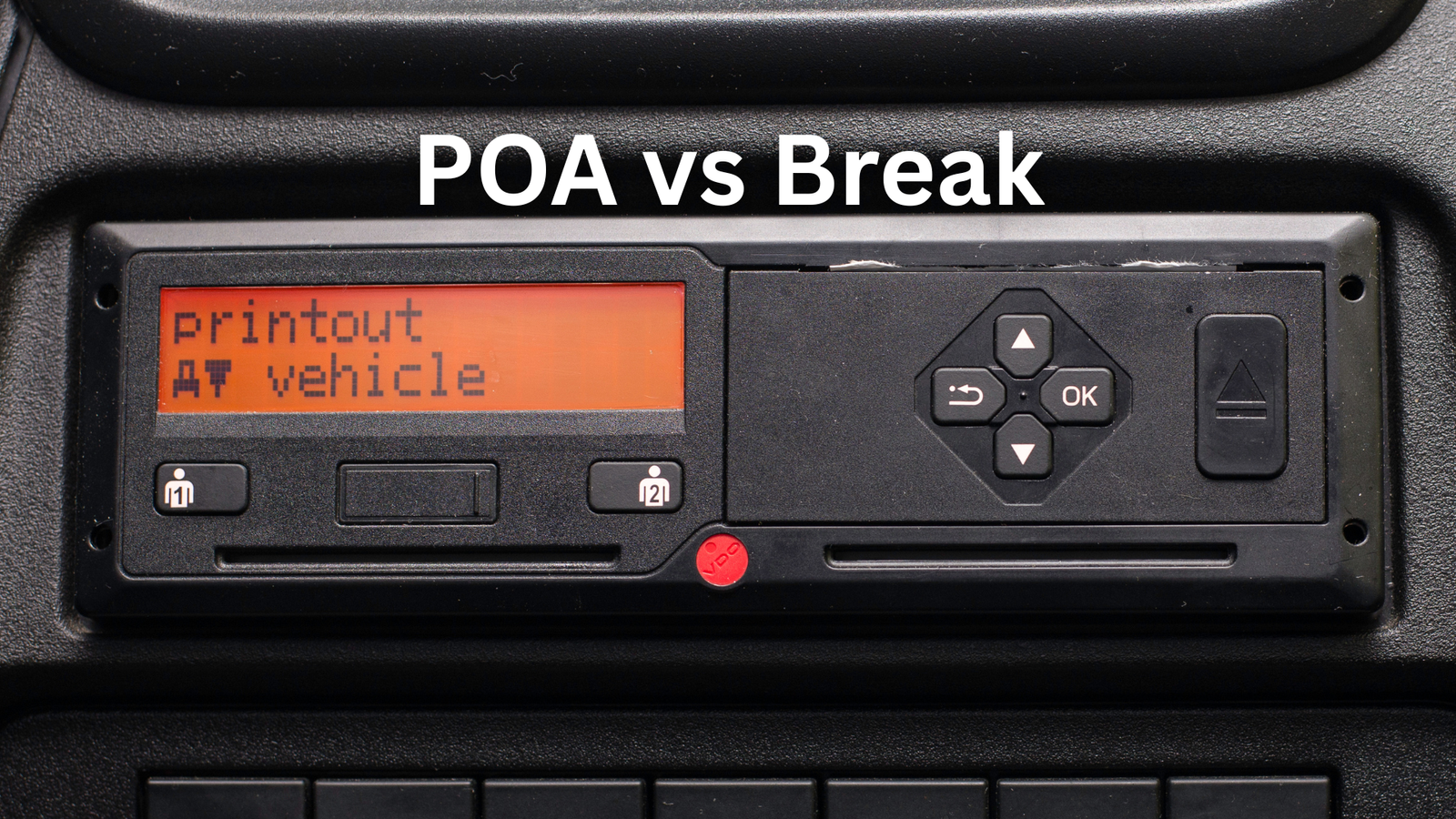
POA vs Break – Know the Difference
POA and breaks are not interchangeable, and using the wrong one at the wrong time is one of the fastest ways to fail an audit.
-
POA pauses the Working Time clock
-
A break resets the Working Time break requirement
POA is only valid when you are waiting and the duration is known in advance. It is not rest, and it does not replace a break.
This distinction becomes critical around the 6-hour and 9-hour thresholds, where incorrect POA use often creates hidden infringements.
POA vs Break – The Difference That Gets HGV Drivers Fined
Night Work Rules (00:00–04:00)
Night work is another high-risk area under the Working Time Directive.
If any Working Time is carried out between midnight and 04:00, night work is triggered.
Once triggered:
-
Total Working Time must not exceed 10 hours
-
The limit is assessed over a rolling 24-hour period
-
Breaks pause Working Time but do not increase the 10-hour limit
These rules apply regardless of:
-
Vehicle type
-
Tachograph use
-
Employer
Night work commonly affects drivers who start very early, work overnight, or combine shifts across midnight.
Night Work Rules for HGV Drivers Explained
The Rolling 24-Hour Rule
The Working Time Directive does not work on calendar days.
WTD limits are assessed over a rolling 24-hour period, starting when Working Time begins.
They do not reset at:
-
Midnight
-
Shift start
-
Pay reference points
This catches out drivers working nights, split shifts, or irregular patterns, especially when combined with night work rules.
The key question enforcement looks at is always:
“What does the last 24 hours of Working Time look like?”
Rolling 24-Hour Rule Explained for HGV Drivers
Second Jobs & Manual Entries
Second jobs are allowed under WTD.
Ignoring them in your records is not.
All Working Time from all jobs must be combined when assessing compliance. This includes:
-
Agency work
-
Warehouse or yard work
-
Non-driving paid roles
If work is done away from a tachograph vehicle, it must still be recorded correctly, either by manual tachograph entry or written records, depending on circumstances.
Manual entries either protect you or expose you — there is no middle ground.
Second Jobs, Manual Entries & WTD Explained
Mixed Rules Explained (Drivers’ Hours vs Working Time Directive)
Drivers’ hours rules and the Working Time Directive are separate systems.
-
Drivers’ hours rules follow the vehicle
-
Working Time Directive rules follow the driver
Confusing these systems leads to incorrect assumptions, particularly when switching between vehicle types, employers, or job roles.
Mixed Rules Explained – Drivers’ Hours vs Working Time Directive
New HGV Drivers
Most Working Time infringements occur in the first six months of a driving career.
Not through bad driving — but through bad assumptions.
Agency work, night shifts, POA misuse, and second jobs are common early traps. This guide focuses on conservative habits that protect your licence while you build experience.
Final Takeaway
The Working Time Directive is not flexible.
It is not negotiable.
And it is not improved by creative recording.
If the time is not clearly exempt —
it counts as Working Time.
Daily and weekly rest periods are governed by drivers’ hours regulations, not the Working Time Directive.
You must comply with both systems at the same time.
Use the guides above to understand each rule properly and stay compliant.