
This guide covers the main UK speed-limit signs and default limits. Understanding these limits is key for road safety and staying on the right side of UK traffic law. Always stay vigilant and adjust your speed to the prevailing conditions.
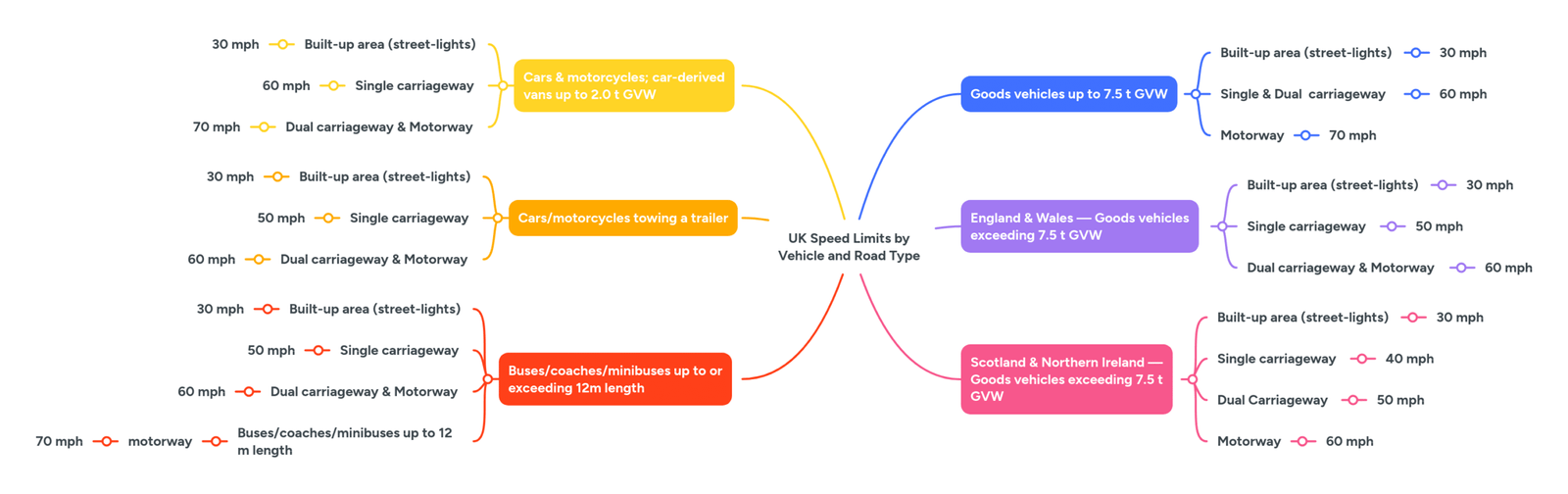
GVW is the vehicle’s gross weight on the road.
“Built-up area” = a street-lit road unless a sign says otherwise. In Wales the general default in built-up areas is 20 mph.
The 70 mph in the map is the motorway limit for goods vehicles up to 7.5 t GVW when the vehicle is a rigid and not towing. If articulated or towing, the motorway limit is 60 mph.
Many HGVs have speed limiters set to 56 mph. You must obey the lower of the limiter or the posted/legal limit.
Signs override national defaults.
Quick FAQs
Do these limits apply across Europe?
No. Every country sets its own limits. Use on-board signage data and roadside signs when abroad. The rules in this table are for the UK only.
What if my HGV has a 56-mph limiter?
You must follow the lower of your limiter or the posted/legal limit. The limiter does not grant permission to exceed any signed limit.
What overrides the table?
Any local sign, variable speed limit, temporary traffic order, road works, smart motorway control, or police instruction.
How does towing change things for cars and bikes?
Towing lowers your single-/dual-carriageway and motorway limits as shown in the table. It also lengthens stopping distances. Leave more space and drive defensively.
Why are limits for >7.5 t different in Scotland and Northern Ireland?
Their national defaults for heavier goods vehicles on single and dual carriageways are lower than in England and Wales. Check the row that matches the country you’re operating in.
Safety disclaimer
Signs and local instructions override national defaults. When in doubt, slow down and treat the signed limit as the maximum, not the target.